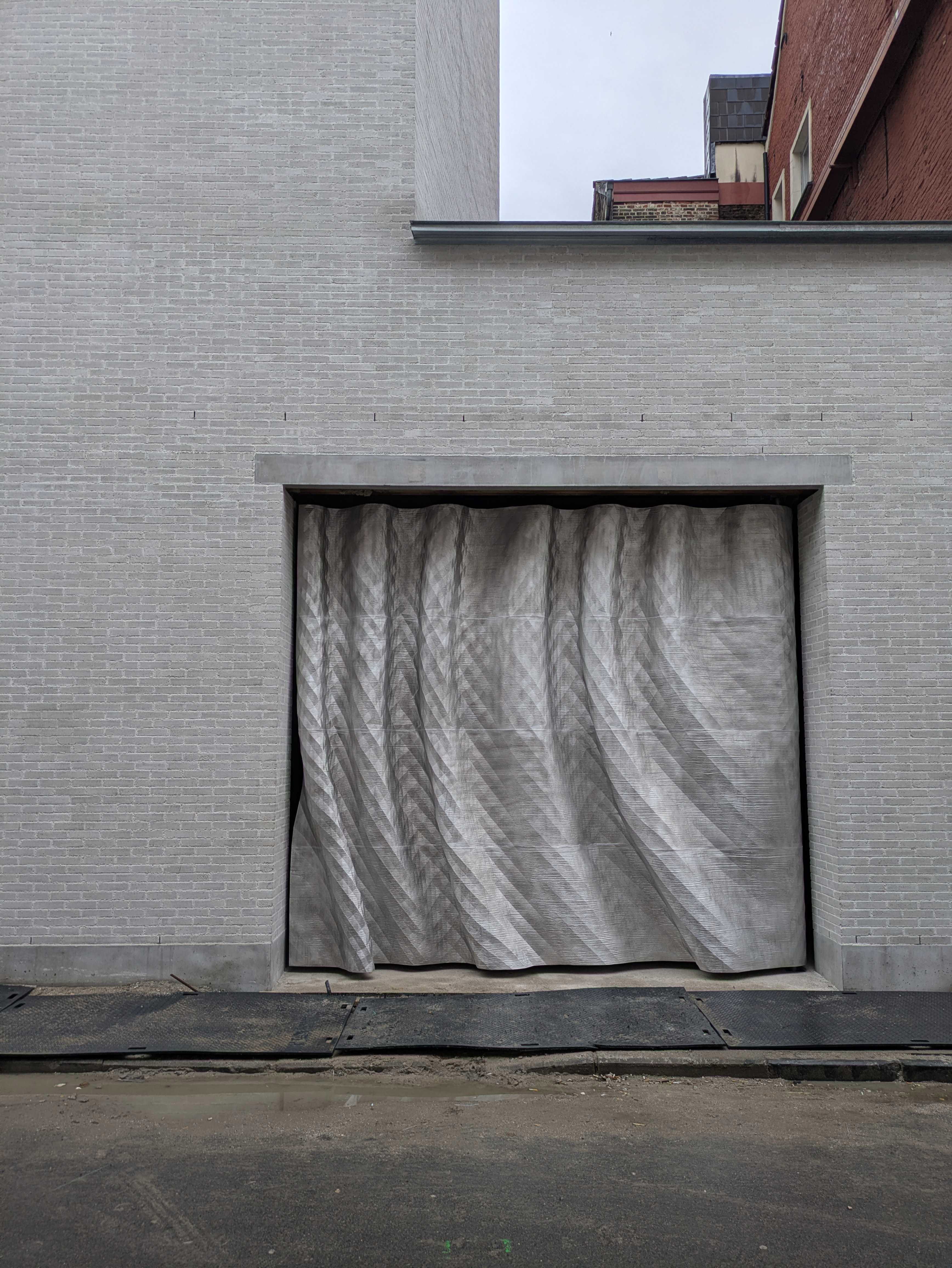
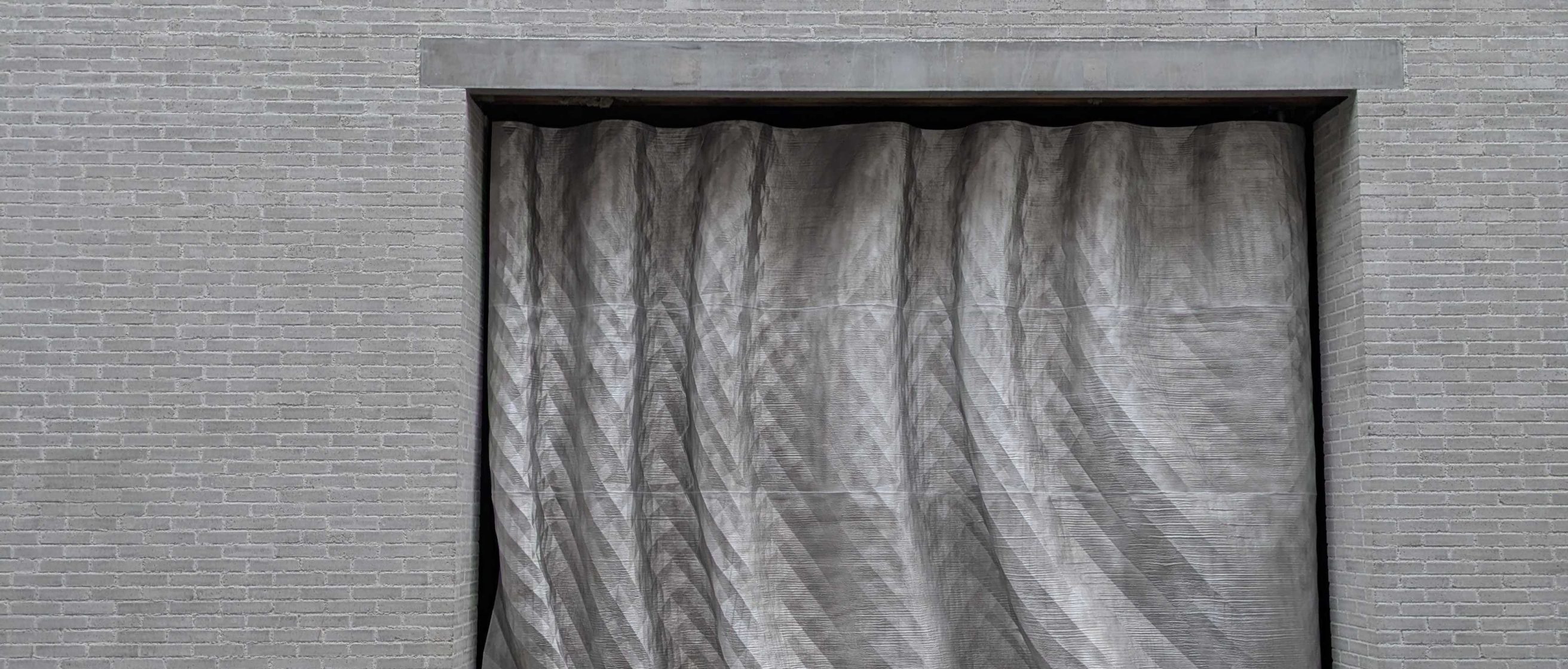
At Design Museum Gent, Freeze Frame 82.2 captures a fleeting motion and turns it into a threshold, where a curtain of aluminium freezes time itself, inviting us to linger in the moment just before something begins.
ABOUT THE PROJECT
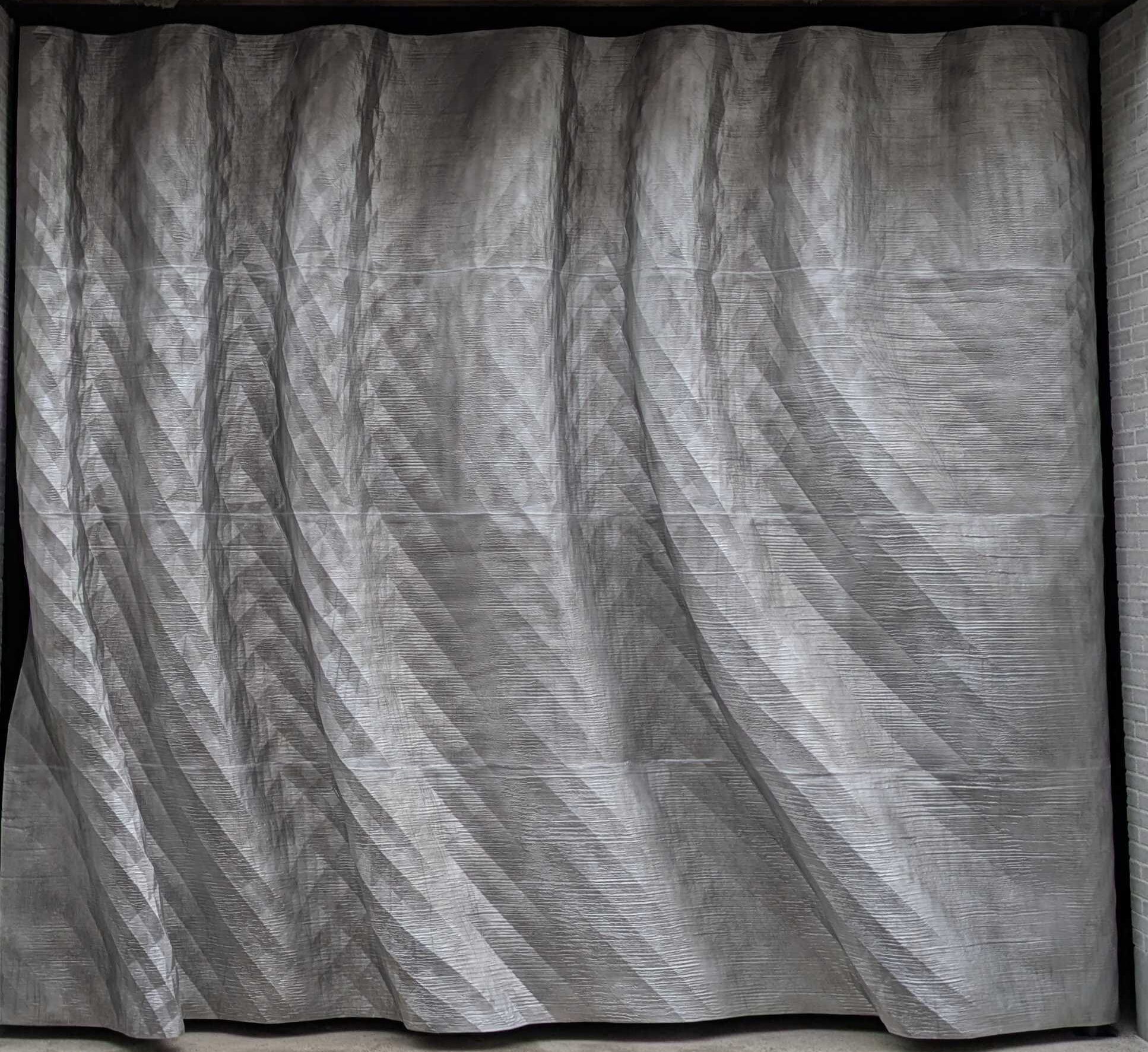
At the entrance of Design Museum Gent, the monumental gate Freeze Frame 82.2 captures a fleeting moment of motion in the form of a solid aluminium curtain. Designed by Antwerp-based studio Unfold and fabricated by MX3D ArtLab, the work began as a digital physics simulation of a moving textile surface, with a single moment — frame 82.2 — “frozen” to define the final form.
Fully 3D-printed in aluminium using MX3D ArtLab’s WAAM technology, it imitates a curtain that appears to be in motion, yet is stilled at one precise instant — the charged moment just before opening. The striking contrast between the soft, flowing form and the rigid material, as well as the fusion of artistic expression and precise robotic fabrication, not only defines the work’s visual impact but also opens up new possibilities for designers and artists to realize their ideas in a more direct and liberated way.
PROJECT GOAL
The concept aims to create a threshold installation that embodies a moment of transition, translating the idea of “being in-between” into a physical experience that both welcomes and challenges visitors. Freeze Frame 82.2 functions simultaneously as a gateway, a spatial filter, and a symbolic marker of a museum that positions itself as a place for ongoing dialogue and change, rather than static display.
From MX3D ArtLab’s perspective, the ambition is always to bring together conceptual thinking and advanced fabrication, using digital manufacturing not only as a means of production but as an integral part of the expression. The work demonstrates how emerging fabrication technologies can materialize complex, time-based gestures into precise, architectural-scale structures, enabling new forms of interaction between object, space, and audience.
THE STORY BEHIND
Freeze Frame 82.2 originated as a computer simulation. Using virtual physics, a digital wireframe cloth composed of tensioned springs was set into motion, simulating the behavior of a curtain. One specific moment in this animation — frame 82.2 — was selected and frozen, becoming the basis for the final physical form.
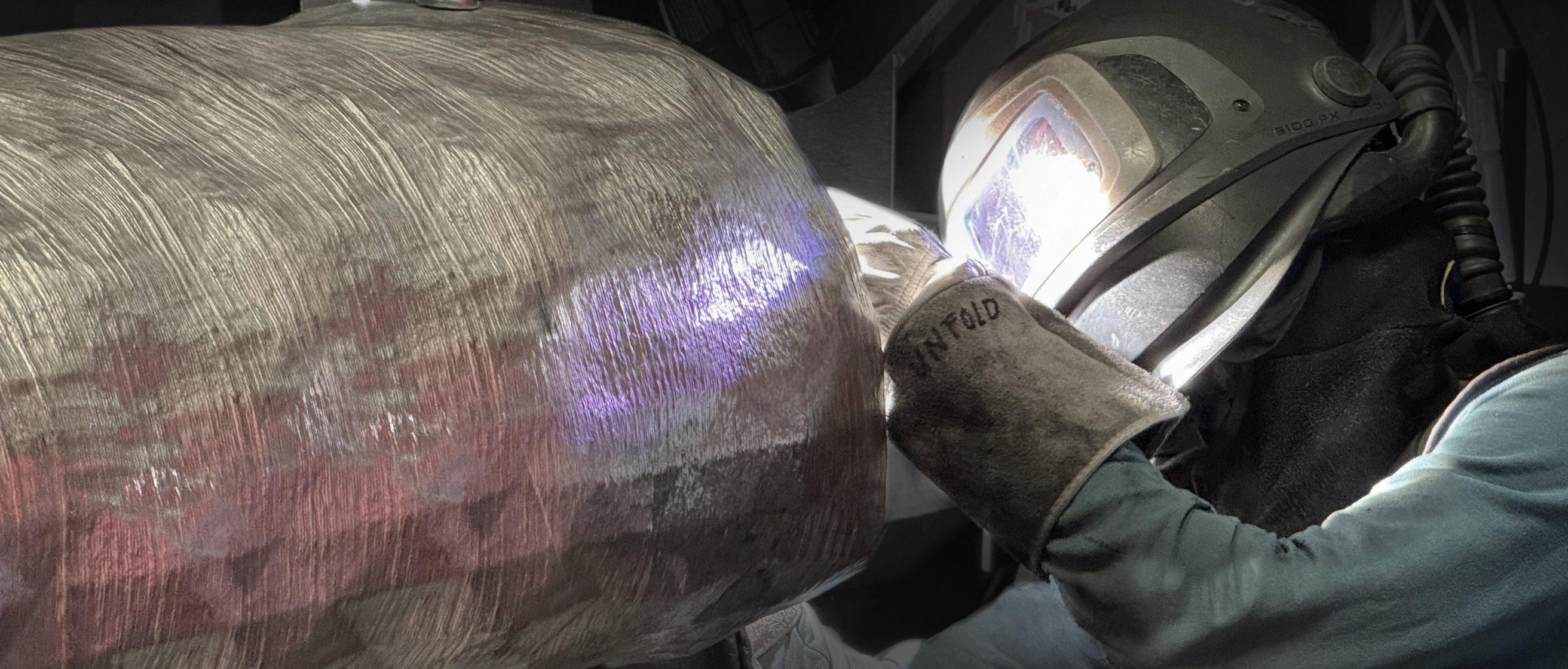
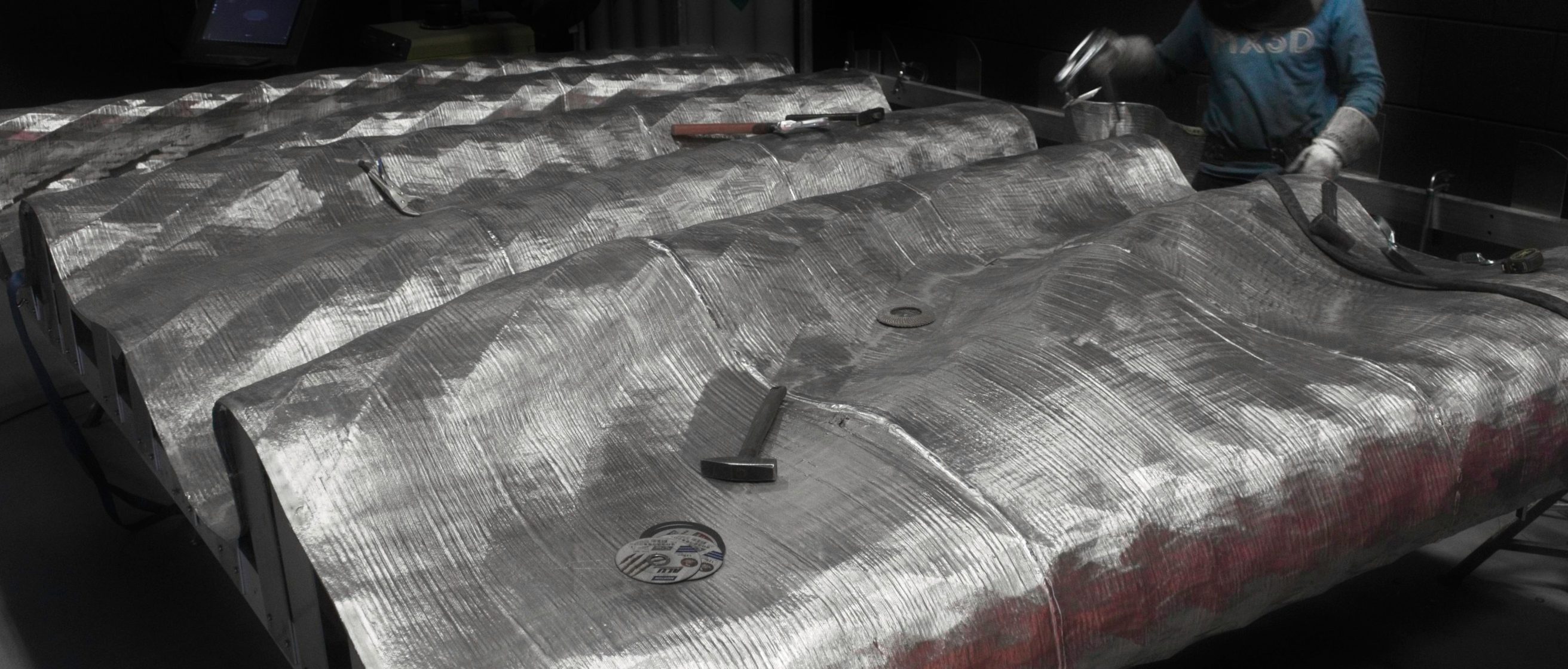
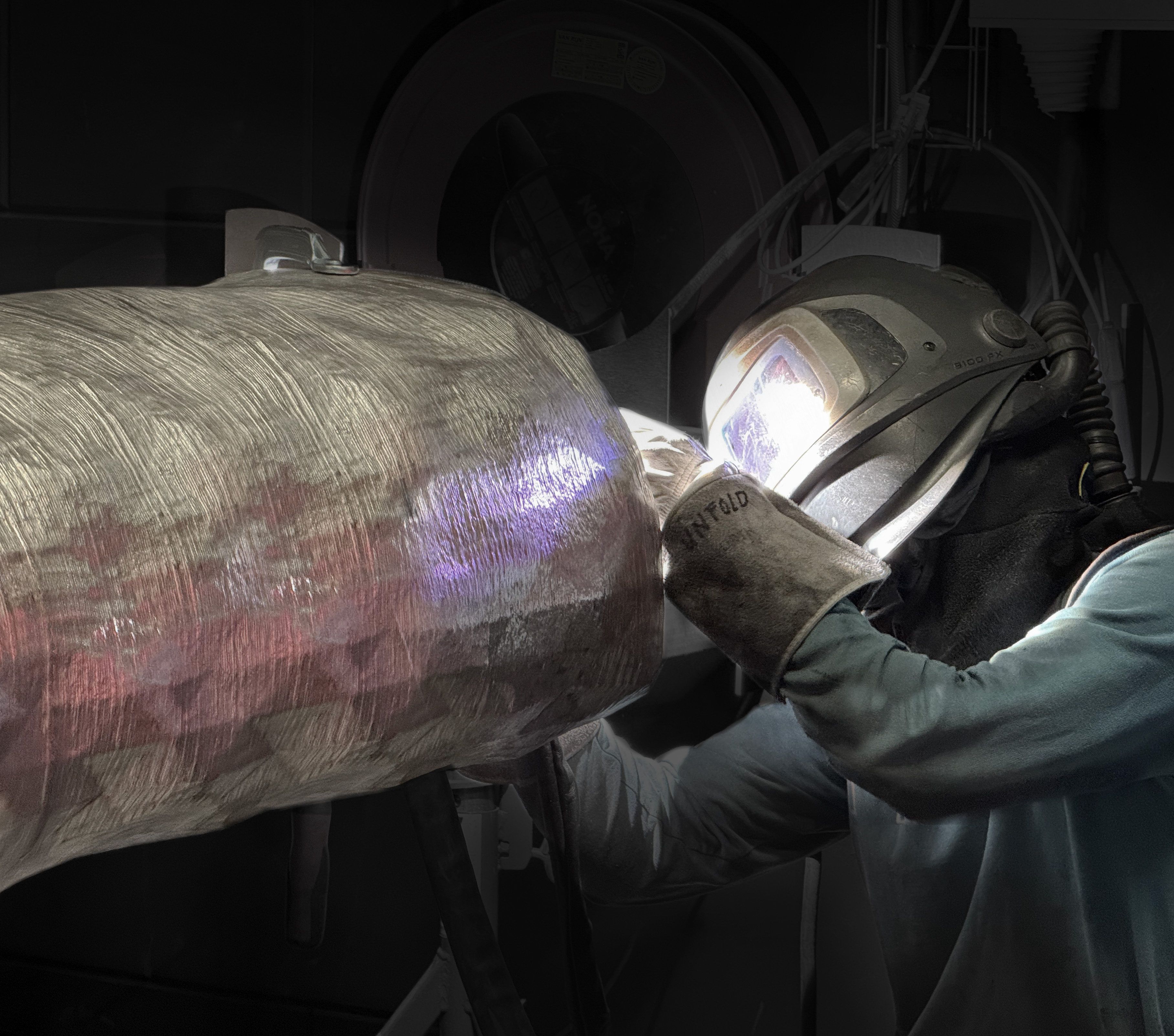
Translating this ephemeral simulation into a functional gate required MX3D ArtLab’s expertise in robotic metal printing. The curtain’s thin, fluid folds posed both structural and manufacturing challenges: the geometry needed to remain expressive while also functioning as a load-bearing architectural element. Using Wire Arc Additive Manufacturing (WAAM), MX3D ArtLab executed the fabrication to realize the intended aesthetics while ensuring durability and structural strength.
REALIZATION
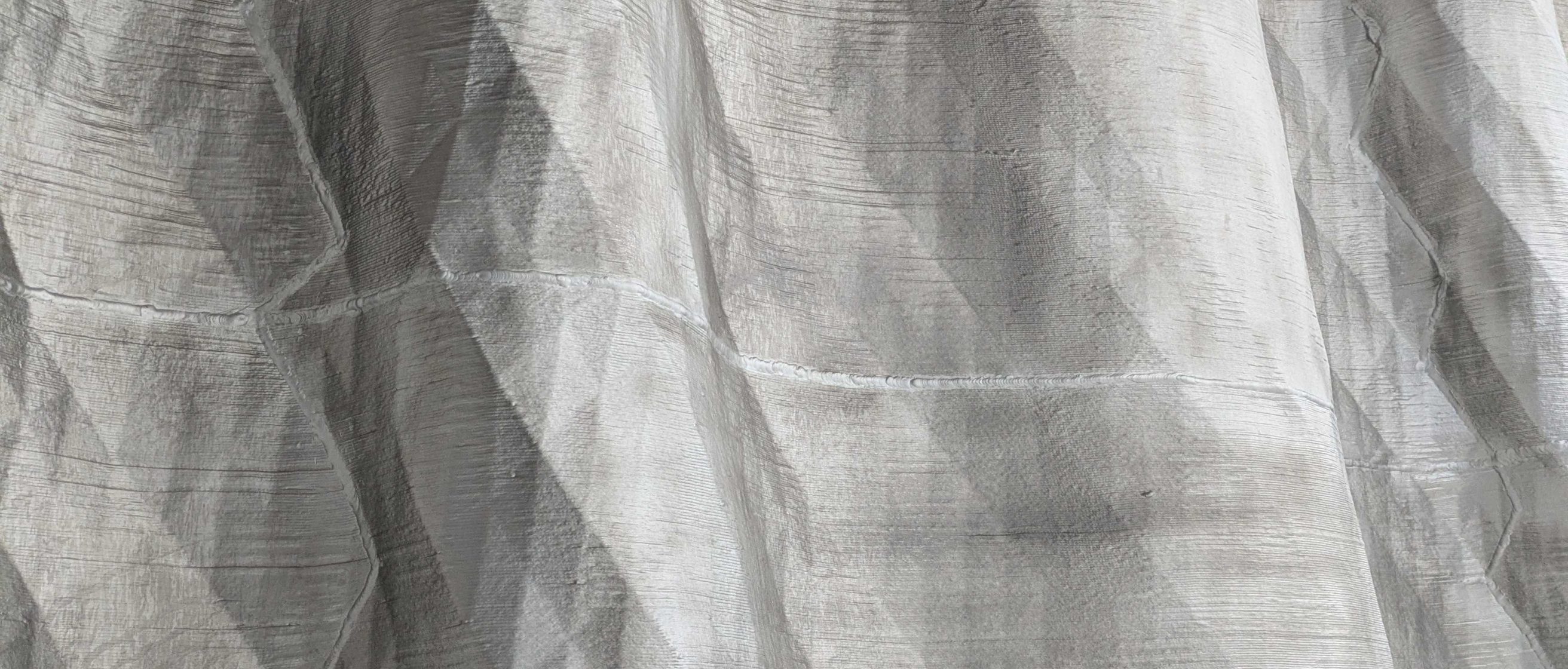
The sculpture was printed in twelve segments and then assembled into a load-bearing frame, resulting in a 250-kilogram printed structure and a total weight of 360 kilograms for the entire gate. The layered texture of the welded beads preserves the movement and energy of the original digital simulation, transforming fabrication traces into an integral part of the aesthetic.